

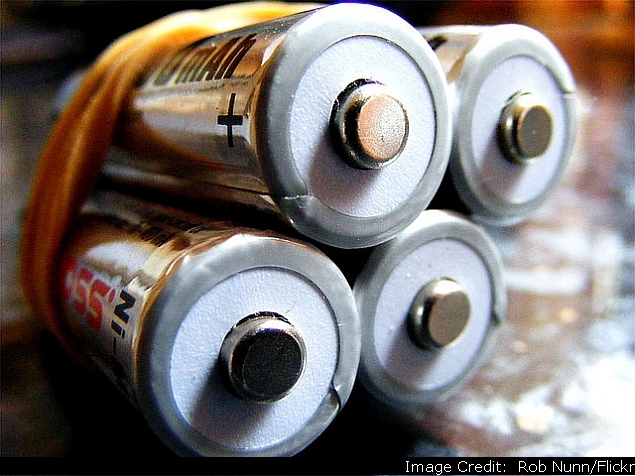
Battery technology hasn't been able to keep up with the demands of our pocket computers, but this could change in the near future. All batteries boil down to an electrolyte, an anode and a cathode. Lithium-ion batteries use lithium as the electrolyte, but not in the anode. Lithium metal would be the optimal choice as an anode material, because it has the highest specific capacity (3860mAh g-1) and the lowest anode potential of all; however, pure lithium anodes degrade quickly, and have safety issues.
A study published in the Nature Nanotechnology journal shows a potential breakthrough that could double the capacity of lithium-ion batteries that are typically used in phones, tablets and other electronics. The paper was co-written by Yi Cui and Guangyuang Zheng of Stanford University, and in the abstract, the authors write about the need for developing batteries with higher energy storage density than existing lithium-ion batteries.
They concluded that lithium metal would be the optimal choice as an anode material, but noted that there are some serious safety concerns because it forms "mossy metal deposits".
New Nanotech Could Double Your Smartphone's Battery Life | NDTV Gadgets